Thinking about buying a 2–4 unit in Watertown so you can live in one unit and let the others help pay the mortgage? You are not alone. With steady renter demand and close-in convenience, Watertown can be a smart place to house-hack or hold a small multifamily. In this guide, you’ll see where prices and rents stand today, how to run simple numbers, what to verify locally, and how Watertown stacks up against nearby markets. Let’s dive in.
Quick market snapshot
Watertown sits just west of Cambridge with strong access to jobs, transit connections, and daily amenities. Recent snapshots show a median sale price near $805,000 for the 02472 area, according to Redfin’s Watertown market page. Typical asking rents often land in the high $2,000s per month, with many two-bedroom units near about $2,900, based on recent portal observations.
Arsenal Yards has added a major amenity cluster with apartments, retail, dining, and entertainment. Learn more on the developer’s site for Arsenal Yards.
Market data checked March 3, 2026. Always confirm current figures before you decide.
Why renters choose Watertown
- Commute options. You are close to Kendall, Harvard, and Boston employment centers, with frequent MBTA bus routes like the 70 and 71 that connect to Red Line transfer points.
- Amenity access. Arsenal Yards, local shops, and restaurants make daily life walkable in several areas.
- Job hubs nearby. Proximity to Cambridge’s life science, university, and hospital clusters supports a steady renter pool.
The takeaway: properties that are walkable to bus corridors or Arsenal Yards tend to lease faster and hold rents more consistently.
What small multifamily looks like here
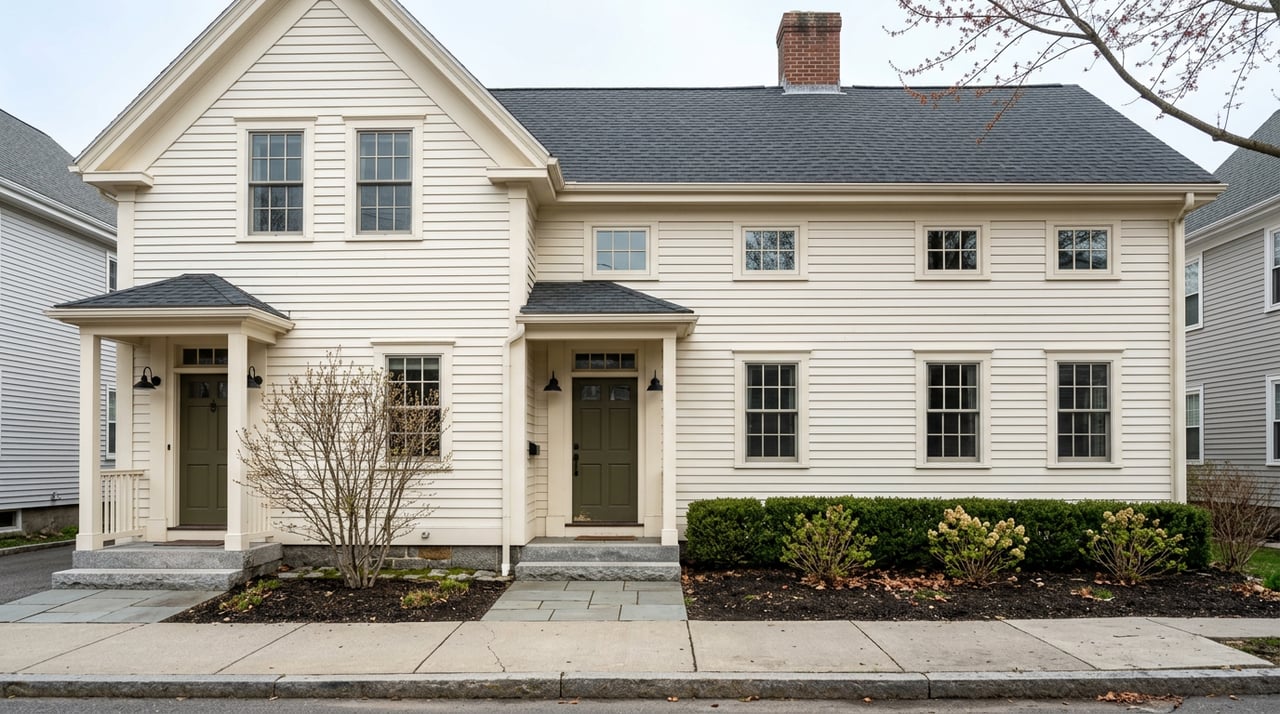
- Common configurations: classic 2- and 3-family wood-frame homes, some 4-unit buildings, and newer mixed-use nearby.
- Era and systems: many buildings date to the late 19th and early 20th centuries. Expect to review electrical, heating, and exterior maintenance closely.
- Pricing range: recent listings for 2–3 families often appear in the roughly $1.0M to $1.8M range, depending on location, condition, and unit mix.
How to underwrite a Watertown 2–4 unit
Start with a simple, repeatable process you can use on any property.
Key definitions and formulas
- Gross Scheduled Rent (GSR): total annual rent if fully leased.
- Vacancy allowance: percentage set aside for expected vacancy.
- Effective Gross Income (EGI) = GSR × (1 − vacancy).
- Operating expenses: taxes, insurance, owner-paid utilities, repairs and maintenance, management, leasing and turnover, reserves.
- Net Operating Income (NOI) = EGI − operating expenses.
- Capitalization rate (cap rate) = NOI ÷ purchase price.
- Gross Rent Multiplier (GRM) = price ÷ GSR.
Local screening assumptions to start
These are not rules, just sensible first-pass inputs you can refine.
- Vacancy: try 5 percent as a default screen based on Greater Boston commentary in this vacancy write-up. Test sensitivity at 3 percent and 7 percent too.
- Operating expenses: for a quick filter, many investors use the “50 percent rule” before building a line-item budget. See an overview of this idea from REIHub. In stronger submarkets with well-maintained buildings, a 35–45 percent expense ratio may be achievable, but verify with actuals.
- Property management: plan around 7–10 percent of monthly rent for third-party long-term management. Add leasing and turnover separately if not included.
A worked example from a local 3‑family
Use this solely as a learning exercise. Verify all details with current MLS data, rent rolls, and the assessor for any property you evaluate.
- Illustrative listing: a 3‑family on Dexter Ave reported a sale at $1,630,000 with a stated rent roll around $10,150 per month (about $121,800 per year). See the example listing details here: 119–121 Dexter Ave.
- Assumptions for screening:
- GSR: $121,800
- Vacancy: 5 percent → EGI = $121,800 × 0.95 = $115,710
- Operating expenses: 45 percent of EGI → $52,070
- NOI: $115,710 − $52,070 = $63,640
- Cap rate: $63,640 ÷ $1,630,000 ≈ 3.9 percent
What it means: that cap rate fits a tight, Cambridge-adjacent submarket. At typical interest rates, pure investor cash flow may be thin without value-add potential or below-market expenses. Owner-occupants often make these deals work by living in one unit, using favorable loan programs, and managing costs closely.
Financing paths for 1–4 unit properties
- Owner-occupied options: FHA and VA allow 1–4 unit financing when you live in one unit. FHA has long treated 1–4 families as eligible residential properties. See HUD’s note on 1–4 family loans here: FHA 1–4 unit reference. Down payments and reserve rules vary, so ask a local lender to size your budget.
- Conventional loans: 2–4 units are still residential but may require higher down payments or reserves, especially for 3–4 units. Rates and guidelines shift with the market.
- Why house-hack: living in one unit can unlock lower down payment, help you qualify on projected rental income, and give you hands-on oversight that improves performance.
Action step: speak with a lender who regularly finances 2–4 unit homes. Ask about minimum down payment, reserve needs, how they count rental income, and today’s interest rate tiers by occupancy type.
Zoning and must-do local checks
Watertown has been advancing planning work in the Watertown Square area and aligning with the state’s MBTA Communities law. Updated zoning can change what is allowed by right, so track new rules on the city’s Watertown Square Area Plan page.
Before you underwrite any property, confirm the following:
- Legal unit count and Certificate of Occupancy for each unit.
- Current leases and actual rent rolls, not just projected numbers.
- Recent inspections and any open code violations.
- Property tax assessment and current municipal tax rate. Taxes can be your largest non-mortgage line item.
- Lead paint status for pre‑1978 buildings. Obtain compliance certificates if applicable.
- Utility responsibility by unit. Clarify what the owner pays versus tenants.
Also consult a Massachusetts real estate attorney on security deposits, notices, and eviction rules, and a CPA on tax treatment and depreciation.
Watertown vs. Cambridge, Newton, and Framingham
Here is a quick, directional comparison to frame tradeoffs on price, rents, and likely returns. Always confirm current numbers before you offer.
| Market |
Median sale price (approx.) |
Typical rent signal |
| Watertown |
~$805,000 (Jan 2026) |
2-bed asking rents often near ~$2,900 |
| Cambridge |
Higher than Watertown |
Rents often exceed $3,000 (see Cambridge overview) |
| Newton |
~$1.4M–$1.5M range |
Higher price point typically means lower cap rates (see Newton market page) |
| Framingham |
Mid‑$600Ks range |
Lower rents than Watertown but higher yield potential (see Framingham market page) |
How to use this:
- Yield vs. appreciation. Lower entry prices in Framingham can pencil stronger cash-on-cash, while Watertown and Cambridge emphasize stability and appreciation potential.
- Tenant mix. Cambridge-adjacent markets draw tech, research, and academic professionals. Framingham balances commuters and local employment nodes. Keep language neutral and focus on commute and housing needs.
- Operations. Older 2–3 families often need capital planning for systems, parking layouts, and exterior upkeep. Newer assets may trade yield for lower maintenance.
- Financing. Owner-occupant loans can be especially helpful in higher-priced submarkets.
A simple 5-step action plan
- Define your buy box. Pick unit count, target neighborhoods, and a price range tied to today’s loan programs.
- Pull real rents. Use actual rent rolls and at least three active or recent comps within a half mile when possible.
- Run two budgets. Screen with the quick assumptions above, then build a line-item pro forma with quotes for taxes, insurance, utilities, and management.
- Inspect and verify. Order a full inspection, confirm unit legality and the C of O, and review assessor records before final underwriting.
- Build your team. Line up a lender with 2–4 unit experience, a local attorney, and a CPA. A responsive agent can source the right buildings and help you negotiate from strength.
If you want eyes on your numbers or help finding the right property, connect with Maija Sawyer to schedule a consultation.
FAQs
What is a “good” cap rate for Watertown small multifamily?
- Cap rates around the mid‑3s to low‑4s can appear on well-located assets. Returns depend on financing, expenses, rent growth, and whether you plan to owner‑occupy.
How do I estimate rents for underwriting in Watertown?
- Start with actual rent rolls for the subject property, then cross-check with recent nearby leases for similar unit sizes and finishes. Avoid relying only on portal estimates.
Can I use FHA to buy a 3‑family in Watertown if I live in one unit?
- Yes. FHA insures 1–4 unit properties for owner‑occupants, subject to program rules and local lender guidelines. See HUD’s note on 1–4 family loans for context.
What local rules should I check before I offer?
- Verify legal unit count and C of O, review the assessor’s tax record, confirm lead paint status for pre‑1978 units, and check for any recent code violations or open permits.
How do Watertown returns compare with Framingham or Newton?
- Framingham’s lower prices can produce higher yield but with different rent levels and commute tradeoffs. Newton’s higher prices often mean lower cap rates but strong stability.